September 10, 2026 | vibecodingnewsletter
AI product of the year - Grok Bot
The vibecodingnewsletter pick
An agent with a computer you can watch. A payment screen you can take over. A task that keeps moving after you close your laptop.
Grok Bot leads this edition, followed by Instinct's new email addresses and the funding behind its personal-agent ambitions. Lovable is adding mid-build follow-ups and testing behind login screens. Netlify is bringing new image models into its deployment platform. And our sponsors, Nosana and Nowa, cover two very different parts of building: GPU infrastructure and visual Flutter development.
The headline
Grok Bot puts the handoff between human and agent on screen
Grok Bot is a team of persistent agents that can work across websites, applications, files, and a terminal. Instead of returning instructions for you to carry out, a Bot can operate the software itself, save its work, and keep going in the cloud while your laptop is closed.
Image: SpaceXAI.
The standout feature is Agent Computer. Open it from a conversation to see clicks, typing, navigation, and the current state of the desktop. You are not limited to an agent saying that it finished something; you can inspect the environment where the work is happening.
When the workflow reaches a sensitive step, the control passes back to you:
- Open Agent Computer and take control.
- Complete the payment confirmation, sign-in, passkey, or two-factor step yourself.
- Return control and tell the Bot to continue.
That is the useful distinction: automation does not have to stop at the checkout screen, and it does not require putting your password or one-time code into a chat. A human can handle the private step in the same environment, then let the agent finish the surrounding work.
Every Bot has its own screen, but the computer is shared. The current documentation says one cloud computer is assigned to your account. Your Bots share files, browser sessions, and command-line credentials. Separate Bots are separate work surfaces, not separate security boundaries.
For builders, that supports a practical division of work: one Bot researches, another reproduces a bug, and another prepares the fix or report. Persistent files and sessions let the work continue without starting from scratch each time.
Grok Bot launched in beta on August 11. Its approval controls include rules requiring human approval for purchases, publishing, deletion, and production changes. Those boundaries belong in the setup, especially when multiple Bots can use the same signed-in services.
Explore Grok Bot · Computer and handoff guide
The other big agent story
Instinct gets its own email address, following a $250M Series B
Instinct is giving its agents something that most online tasks require: an email address. Founder Noah Shinn announced the feature on September 8, allowing Instinct to contact businesses, receive replies, and create accounts without filling its user's personal inbox.

Image: Instinct, via TechCrunch.
Forward an order confirmation and Instinct can work on a return: contact support, provide the order details, check whether you want a replacement or refund, and bring back the return label. Add it to a group thread and it can keep track of the conversation. Users can claim an address at mail.instinct.com.
The funding behind it is substantial. On August 26, TechCrunch reported a $250 million Series B, co-led by Index Ventures and Benchmark, at a $2.5 billion valuation. That brought total funding to $350 million; $350 million was not the size of the new round.
The email rollout follows integrations with 1Password for account access and Stripe for payments. Instinct's interface remains text and calls, while more of the account management happens behind the scenes.
Sponsors
Nosana MCP: give your coding agent access to GPU compute
Go from a conversation with your AI coding agent to a running model on a GPU.
Nosana MCP is an open-source MCP server that connects Claude Code, Claude Desktop, Cursor, Codex, and other MCP clients to Nosana's GPU network. Your agent can browse deployment templates, compare live GPU prices and availability, estimate costs, start a deployment, and return the running endpoint.
Use it for LLMs, ComfyUI, video-generation workloads, Jupyter notebooks, or a remote development environment. The workflow uses Nosana account credits and an API key, without requiring the agent to manage a wallet.
Ask for the workload you want. Review the GPU and estimate. Approve the deployment, get the endpoint, and stop it when you are finished. A companion nosana-deploy CLI brings the same workflow to your terminal and scripts.
Nowa: beautiful Flutter apps, built visually
Build your app without having to become a developer first.
Nowa combines AI app generation with a visual editor for Flutter. Describe your idea, let the AI create the starting point, then refine your screens visually: layout, spacing, typography, colors, and the details that make an app feel finished.
For non-technical builders, that means you do not have to describe every design adjustment in another prompt. You can see the interface and shape it directly. Connect a backend such as Supabase or Firebase, or use an API for the services your app needs.
The underlying Flutter code remains accessible. View it, edit it, or export it as your project grows - without making code the starting requirement.
This week's builder updates
Lovable: steer a build while it runs, then test the signed-in app
Lovable's September 8 changelog adds follow-up messages during Build and Plan mode. Send a correction or a new requirement while work is running; Lovable picks it up at a natural stopping point without throwing away completed work. Follow-ups replace the older message queue.
Browser testing can now reach pages behind your app's login when authentication uses Lovable Cloud. With one user, Lovable signs in as that user. With several users, it asks which account to use if you have not specified one. Workspace admins and owners can request a specific account.
There is also a useful sharing change: project uploads no longer copy automatically when someone remixes a public project. Public remixes receive the code without the original files or chat history.
Netlify: ChatGPT Images 2.5 reaches AI Gateway and Agent Runners
On September 9, Netlify added ChatGPT Images 2.5 models to AI Gateway and Agent Runners. The models are available across standard, background, scheduled, and edge functions, alongside Netlify's gateway authentication, caching, and rate limiting.
The update puts image generation into the same platform where an app is built and deployed, rather than requiring a separate image-generation integration for every project.
A September 4 improvement also changes ambitious first builds: Agent Runners can deliver a partial working project and next steps within the available credit budget, instead of exhausting it before producing a preview.
Unity: first-party Claude Code skills for game builders
Unity launched its official Claude Code plugin on September 9, announcing 29 skills at launch. Its guidance covers recurring engine work such as UI choices, localization, sprite atlases, and rendering tasks.
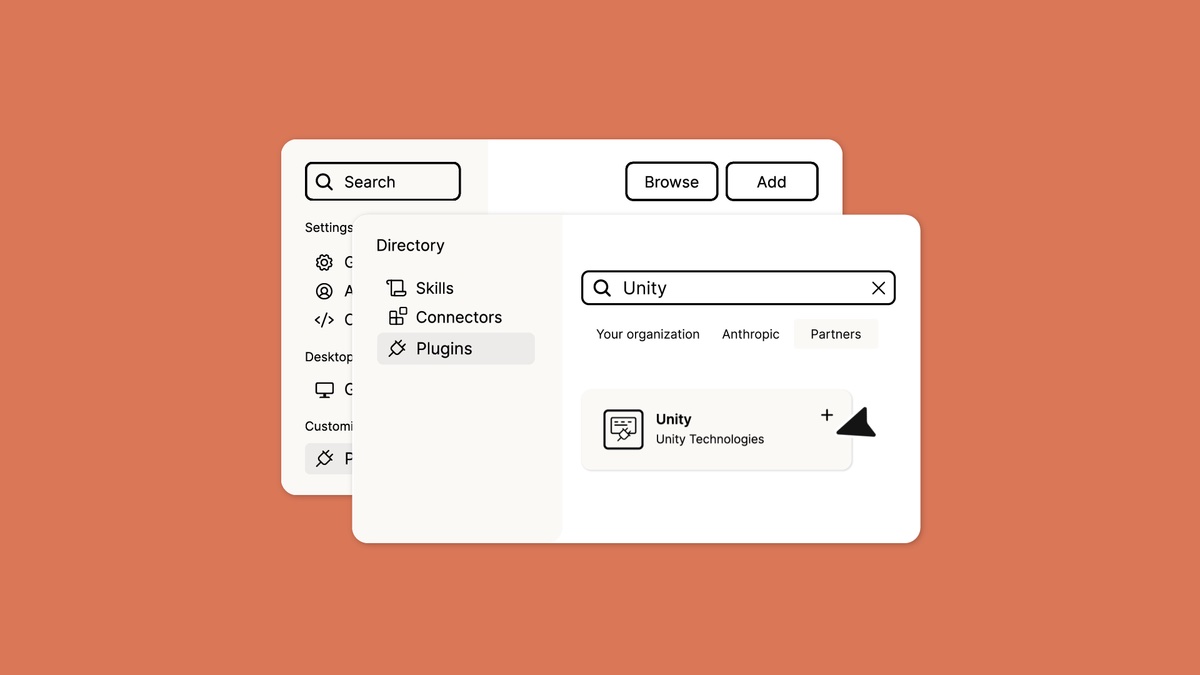
Image: Unity.
Inside Claude Code, install it with:
/plugin marketplace add Unity-Technologies/unity-agent-plugin
/plugin install unity@unity-agent-plugin
The plugin provides skills. CLI installation and live Editor connectivity are separate setup steps, covered in Unity's documentation.
Cognition: over $2B for the next phase of coding agents
Cognition's September 8 funding announcement puts its valuation at $48 billion, following a round of over $2 billion led by Andreessen Horowitz and Accel. Its stated direction extends beyond responding to prompts into proactive engineering work, incident triage, and automations.
From the toolbox
Emergent's Emmy helps before you spend build credits
Emmy, introduced July 31, is Emergent's in-product assistant for questions about building and deploying an app. It can help turn an idea into a build-ready prompt, explain agent choices, and respond to a screenshot of a confusing screen.
Conversations with Emmy do not consume build credits. It is available in the desktop web experience, not mobile web or the mobile app. It does not read your source code or account history, so it is a guide to the workflow rather than a substitute for inspecting an implementation.
Community watch
Unexpected Claude usage is prompting security questions
A Claude Max usage discussion on Reddit appears in TechCrunch's September 8 reporting on stolen Claude sessions. The report describes paid usage being consumed through compromised sessions and warnings about infostealer malware. The initial access method in the main reported case remained unclear.
Unexpected usage is a reason to review background work, connected tools, and sessions - not proof of theft on its own. For suspected compromise, revoke affected access and investigate the device as well as the account.
Building something worth sharing? Post it in r/vibecodingcommunity, explore the Vibe Coding Hackathon, or send it to vibecodingnewsletter.